
Is it serious or can it wait? The reasoning vets actually use
By Victor Costa, veterinarian (CRMV MG 21605, Brazil) · August 11, 2026 · 8 min
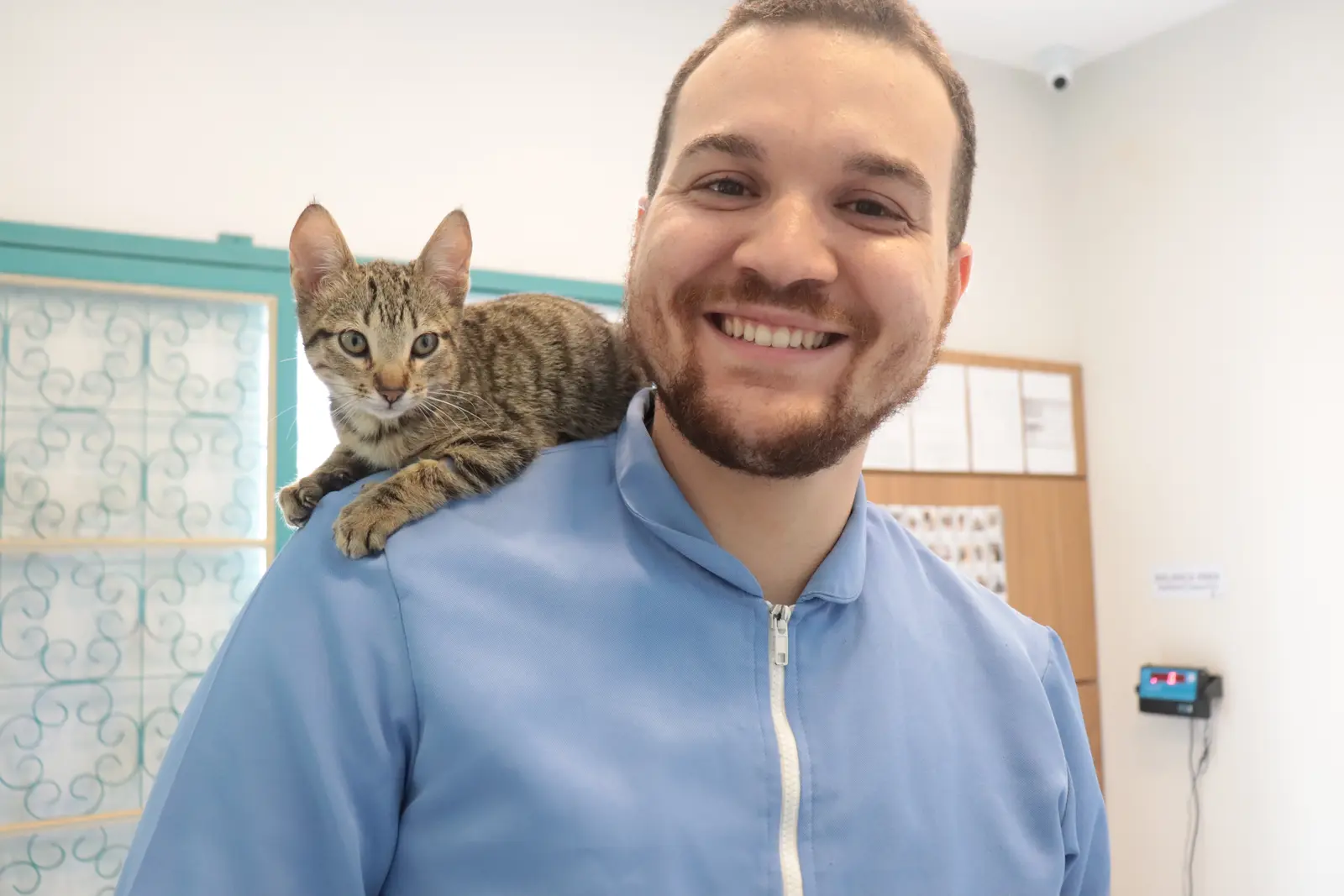
“Is it serious or can it wait?” is the question I receive most often, usually late at night. After an hour of searching, families find conflicting answers: “it is nothing” and “go now”. Here is how I assess that question.
Why the internet cannot answer this
A search for “dog vomiting” returns both ends of the spectrum at once, because both exist. Vomit can be grass in the stomach or an obstruction. Generic text knows nothing about YOUR animal, and that is where it fails: triage is never about the symptom, it is about the symptom in that patient.
At the clinic, nobody decides on an isolated sign. The decision comes from the whole: what changed, since when, how intensely, and in which animal. It is a simple filter to learn, and it is what this article teaches.
The three-question ruler
Facing any symptom, run these three questions, in this order:
1. Is a vital system compromised? Labored breathing, pale or bluish gums, fainting, seizures, a suddenly swollen belly. Any of these ends the conversation: immediate care, no watching at home. The full list of absolute emergencies is in the Merck Veterinary Manual, the open reference vets use most.
2. Does the symptom repeat or combine? One isolated vomit in an active animal is different from three vomits in six hours, and very different from vomiting plus apathy. Repetition and combination raise the urgency. Bloody diarrhea, vomiting that will not stop or total water refusal demand same-day care.
3. Did the background behavior change? Does he play, eat, come when called? An alert animal with one mild symptom usually allows 12 to 24 hours of observation. An animal too quiet, hiding, uninterested in what he loves, does not. Apathy is among the earliest and most ignored signs.
The signs that never wait
Keep this short list. With any of these, “watching at home” stops being an option, per the consensus of emergency references such as the AVMA and the Merck Veterinary Manual:
- Difficulty breathing, open-mouth breathing in cats
- Pale, greyish or bluish gums
- Retching without producing, with a distended abdomen
- A male (especially a cat) straining to urinate without producing
- Seizure, fainting, sudden disorientation
- Ingestion of a known toxin: grapes, chocolate, human medication, poison
- Bleeding that does not stop within minutes
- Evident pain: crying at touch, trembling, hunched posture
The two-extremes mistake
After hundreds of cases between routine and ER practice, the pattern I see most is not neglect. It is the opposite: devoted families miss on both sides for the same cause, the lack of a filter.
On one side, the pet parent who waits too long because “he was always like that” or because someone in the group said it would pass. On the other, the one running to the ER at every sneeze, paying for visits she did not need and leaving labeled “the dramatic one”. Both extremes grow from the same root: deciding without judgement is deciding in fear.
While you decide: what to note
If the ruler said “you may watch”, watch with method, because these notes are gold if the visit happens:
- The time of each episode
- Appearance of vomit, stool or urine (a photo beats any description)
- Everything eaten in the past 24 hours, including what he stole
- One objective measure: did he drink? eat? play?
If your concern involves coughing or breathing, see the warning signs in feline asthma and tracheal collapse in dogs. These guides help you describe an episode and recognize when care cannot wait.
Frequently asked questions
Is white foam vomit serious?
Isolated, in an alert animal that keeps eating and drinking, it usually allows observation. Repeated, or with apathy and food refusal, it demands same-day evaluation.
My cat is quieter but still eats. Do I wait?
Cats hide disease as a species strategy. New quietness lasting more than a day, even with appetite, deserves an appointment. If he stops eating, urgency rises fast: a cat that does not eat gets sick quickly.
Can diarrhea without blood wait?
In a healthy, alert, hydrated adult, 24 hours of observation with a light diet is usually reasonable. Puppy or kitten, senior, or diarrhea with blood or vomiting: same day.
How do I know he is in pain?
Crying at touch, trembling, fast breathing at rest, hunched posture, hiding and new aggression are the most common signs. Animals in pain rarely announce it loudly.
What if I rush to the vet and it is nothing?
Then you paid for one visit to sleep in peace and your pet got examined. No serious vet argues with a pet parent who arrived early. The opposite is what hurts.
The next step
The Prevention and First Aid guides are being prepared. On the ebooks page, you can see the available reading and sign up for guide updates. The free checklist helps you start observing your pet. Materials are in Brazilian Portuguese.
Clinical content reviewed and approved by Victor Costa, veterinarian (CRMV MG 21605, Brazil). Translation of the reviewed Brazilian Portuguese content.
This article is educational and does not replace an appointment with the veterinarian. In an emergency, seek care immediately.
More to explore
Keep learning about pet care
Explore the materials and community. Content is in Brazilian Portuguese.
Explore the ebooks