
Pancreatitis in dogs and cats: signs and care
By Victor Costa, veterinarian (CRMV MG 21605, Brazil) · September 15, 2026 · 8 min
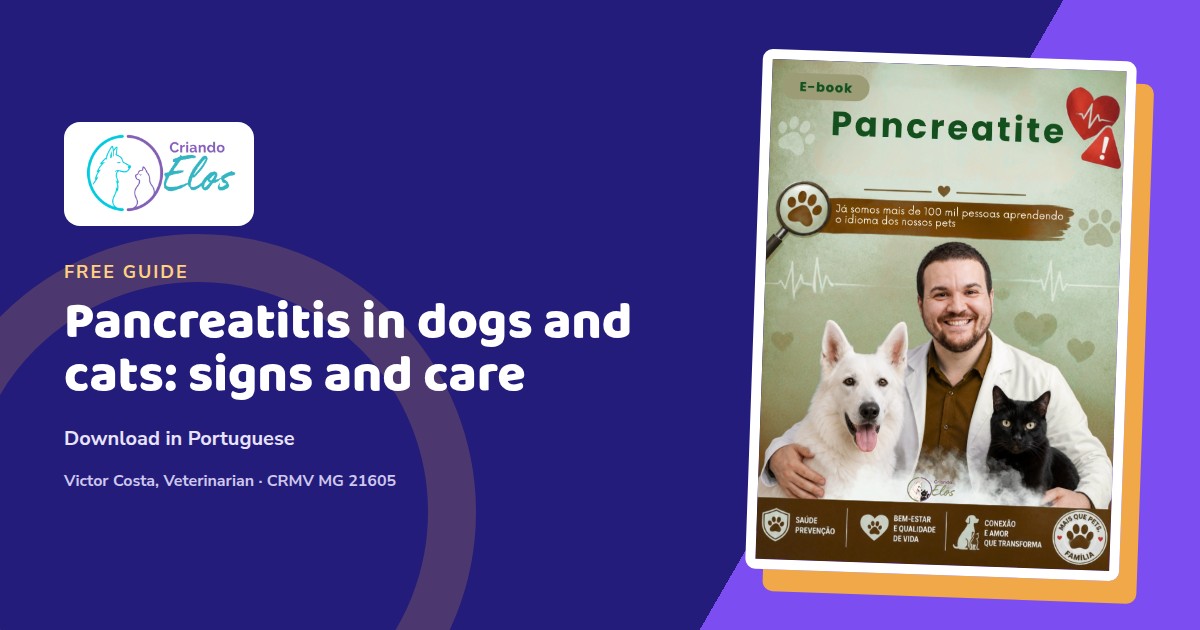
Editorial composition based on the original Criando Elos e-book.
A dog vomits, refuses food and seems uncomfortable lying down. A cat simply hides and leaves almost the whole meal untouched. Pancreatitis can look like either situation, but other illnesses cause the same changes. Getting the animal assessed takes priority over trying to name the disease at home.
Which signs need prompt veterinary attention?
Repeated vomiting, poor appetite, unusual tiredness and apparent abdominal pain warrant contacting a veterinarian the same day. In cats, even a subtle change in appetite deserves attention without vomiting. Waiting for a particular posture or a visibly swollen belly can delay recognition of a problem.
Seek emergency care immediately for collapse, trouble breathing, profound weakness, severe pain or persistent vomiting that prevents your pet from keeping water down. Repeated unproductive retching and abdominal enlargement also require emergency assessment, including for causes other than pancreatitis.
A dog may lower the front of the body while keeping the hindquarters raised, sometimes called a prayer position. When accompanied by illness, this posture can suggest abdominal discomfort. It does not confirm pancreatitis, and its absence does not rule out pain. Do not press the abdomen to test your pet’s reaction.
Cats may become less social, stay still or hide when they feel unwell. Cornell describes the subtle presentation of feline pancreatitis, including illness without the digestive signs people tend to expect. Describe what has changed from that particular cat’s normal routine.
Keep your pet comfortable while arranging care and avoid unnecessary handling. Do not give human painkillers or medicines left over from another appointment. The guide to when to go to the vet covers other warning signs, while a veterinary team can assess the urgency of your pet’s situation.
Why does the pancreas become inflamed?
The pancreas helps with digestion and makes hormones, including insulin. Pancreatitis means inflammation of pancreatic tissue. Premature activation of digestive enzymes contributes to damage, alongside other inflammatory mechanisms. Saying that the organ simply “digests itself” captures only part of the process.
The specific cause remains unknown in many dogs and cats. In dogs, dietary indiscretion, substantial triglyceride abnormalities and certain hormonal conditions may be relevant to the investigation. A fatty meal is useful history to report; it does not prove what caused the episode. The MSD Veterinary Manual, updated in September 2025, distinguishes identified causes, risk factors and associated illnesses.
Automatically linking feline pancreatitis to fat or excess weight is inappropriate. The 2021 ACVIM consensus statement on pancreatitis in cats describes uncertainty about causes and the frequent absence of an identifiable trigger. A consistent feeding routine does not rule out the disease.
| Feature | Dogs | Cats |
|---|---|---|
| Noticeable signs | Vomiting, refusal of food and pain may stand out | Poor appetite and lethargy may predominate |
| Food history | Report access to fatty foods | Do not assume dietary fat caused the disease |
| Associated illness | Investigation follows history and test results | Intestinal and biliary disease can occur alongside it |
| Feeding plan | Fat restriction may be prescribed | Diet depends on the individual cat’s needs and other illnesses |
Inflammation involving the pancreas, intestine and biliary system together is called feline triaditis. Not every cat with pancreatitis has this combination. The veterinarian uses the overall findings to decide what else needs investigating.
How do tests help establish a diagnosis?
Diagnosis combines the history, physical examination, blood tests and imaging. Pancreatic lipase testing may appear on the request as cPLI for dogs or fPLI for cats. These tests provide information about the pancreas, but the result needs interpretation in the context of the patient’s condition.
Ultrasound examines the pancreas, nearby tissues and other abdominal organs. Subtle changes can be difficult to detect. Timing, disease severity and the examiner’s experience affect what the scan reveals. A scan without obvious abnormalities does not, by itself, end the investigation when an animal remains unwell.
A complete blood count and chemistry profile help assess hydration, electrolytes and effects on other organs. They also guide the search for alternative explanations. Intestinal obstruction, poisoning and kidney disease can cause some of the same signs. The investigation needs to consider these possibilities rather than focus entirely on the last food offered.
For example, a family might report an unfamiliar meal and a test might indicate a pancreatic abnormality. Together, these findings can raise suspicion, but the patient’s condition and remaining results still matter. Ask which findings support the working diagnosis and what remains uncertain, rather than treating one test as the final answer.
What do treatment and feeding involve?
Treatment may include correcting dehydration, managing pain and nausea, and providing nutritional support. Whether hospitalization is necessary depends on clinical condition, the ability to maintain nutrition and hydration, and complications. Signs seen at home do not always reveal the full severity of illness.
Do not start a fast yourself to rest the pancreas. The veterinary team decides when and how to provide nutrition, and which food to use, based on stability and tolerance. Vomiting that remains difficult to control calls for reassessment. Early nutritional support does not mean forcing food into a nauseated animal.
The 2022 ISFM guidelines for inappetent hospitalized cats discuss assisted nutrition and the management of nausea, pain and stress. A feeding tube can be part of treatment when food intake is inadequate. Choosing, placing and using one requires a trained team and specific instructions for the family.
For dogs, a veterinarian may prescribe a diet with controlled fat content. Cats should not automatically receive the same strategy: achieving sufficient intake and accommodating other illnesses can change the choice of food. Do not replace the prescribed diet with homemade recipes, broth or meat alone without nutritional guidance.
Before discharge, ask for written instructions covering the food, amount, timing and response to refusal or vomiting. Confirm which treats are permitted. If another family member handles meals, share the same instructions so that the feeding plan is followed consistently.
How can you monitor recovery at home?
Record concrete observations to report progress. This list organizes information; it does not diagnose pancreatitis or justify waiting when your pet deteriorates:
- Note what you offered and how much your pet actually ate.
- Record the times of vomiting episodes and changes in stools.
- Observe activity, willingness to interact and possible discomfort.
- Keep a list of prescribed medicines and the times they were given.
- Save the clinic’s contact details and instructions for urgent reassessment.
The guide to what to note before the vet visit helps organize that history. “Ate about half the prescribed portion and vomited afterward” usually tells the team more than “seems better.” Do not change or stop medicines without speaking to the veterinarian.
Prevent access to garbage and leftover meals. In its December 2025 advice, Cornell Riney discusses digestive illness and pancreatitis associated with rich foods that dogs receive or steal. Explain the rules to visitors and caregivers, while recognizing that this precaution cannot prevent every case.
Some animals experience further episodes or persistent disease. Chronic pancreatic damage can affect digestion or insulin production, but these outcomes are not inevitable. Report weight loss, changes in stools or increased drinking and urination. The duration of dietary changes and follow-up care needs to be individualized.
Frequently asked questions about pancreatitis
Does pancreatitis always follow a fatty meal?
No. That history can be relevant in dogs, but many cases have no identifiable cause. Treating dietary fat as the usual explanation in cats does not reflect the available evidence.
Can a cat have pancreatitis without vomiting?
Yes. Poor appetite and lethargy may be the most noticeable changes. Report them promptly, especially if the cat is also hiding or seems uncomfortable.
Can I feed my pet with a syringe?
Do not force food or water into the mouth. This carries risks of aspiration and food aversion. If intake is inadequate, the veterinary team should choose a safe method of nutritional support.
Does a lipase test settle the diagnosis alone?
No. The result needs to be considered alongside signs, the physical examination and other tests. A single finding also cannot establish the full severity of disease or the treatment required.
Will every pet need the same diet forever?
No. Species, recurrence, clinical response and other illnesses affect the plan. Follow the current prescription until reassessment rather than assuming that improvement makes every food suitable again.
Can pancreatitis be fatal?
Yes. Severe disease can cause complications in other organs. Many patients recover with treatment, but signs observed at home cannot reliably predict the outcome.
The e-book available after registration below is in Brazilian Portuguese. Use this article and the material to prepare questions for your veterinarian. If your pet has the warning signs described above, arrange care before continuing to read.
Keep this guide for later
Enter your details to access the complete PDF. The downloadable material is in Brazilian Portuguese.
Material available in Brazilian Portuguese.The PDF mentions digestive rest. Fasting should not be imposed routinely: feeding and nutritional support are decisions for the veterinary team. The article explains differences between dogs and cats.
Get the complete e-book
Enter your name, email and WhatsApp number. The download appears here after registration.
We could not send your details. Please try again.
Your details will register the request and allow communications related to Criando Elos.
Your e-book is ready
Pancreatite
Download the Portuguese PDFMaterial available in Brazilian Portuguese.This article is educational and does not replace an appointment with the veterinarian. In an emergency, seek care immediately.