
Atopic dermatitis in dogs and cats: itch and care
By Victor Costa, veterinarian (CRMV MG 21605, Brazil) · September 15, 2026 · 7 min
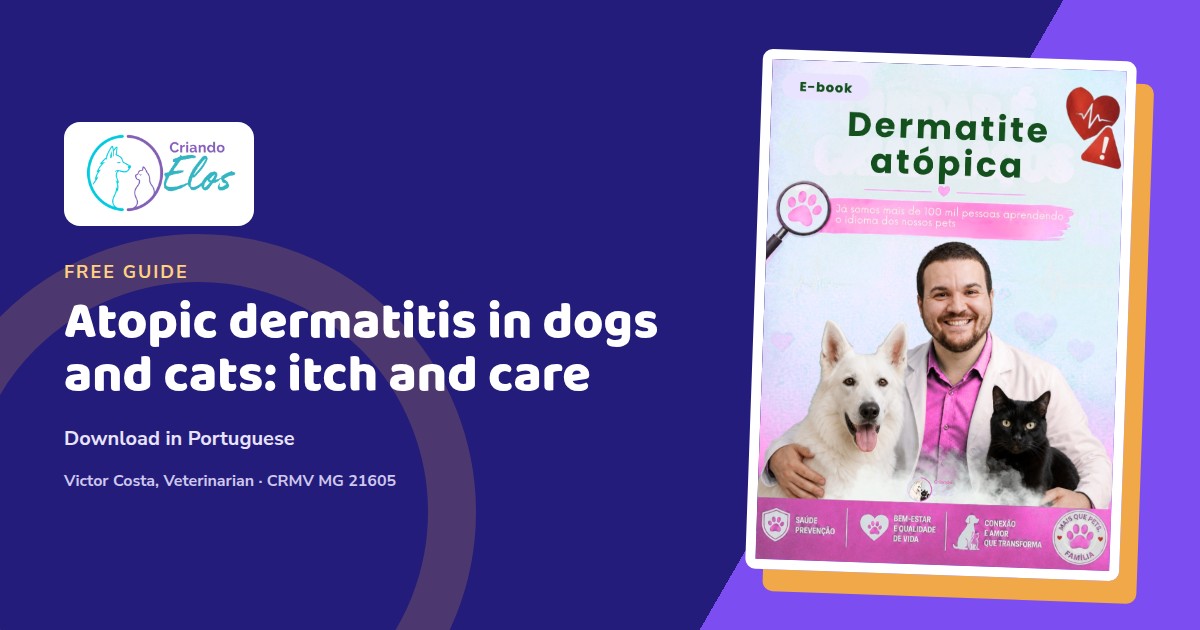
Editorial composition based on the original Criando Elos ebook.
Your dog wakes up to lick their paws. Your cat has a bald patch on their belly, although nobody sees them scratching. When these changes keep returning, the skin needs investigating: the appearance of a lesion cannot distinguish atopy from fleas, infection or a reaction to food.
This article combines the subject of the Criando Elos ebook with veterinary references to explain that investigation. It is educational content, without an individual diagnosis or a claim that the ebook’s author clinically reviewed this article.
How itching shows up in dogs and cats
Licking, biting the skin and rubbing the face can all be ways of expressing itch. A dog’s paws and ears deserve attention when problems return after treatment. A different smell, redness and skin that becomes darker or thicker are details to report, rather than a home allergy test.
In cats, small crusts, wounds on the head or neck and patches of missing fur may be more noticeable than scratching itself. The Merck Veterinary Manual description of feline atopic skin syndrome includes these patterns. Other diseases can produce similar lesions.
| Aspect | Dogs | Cats |
|---|---|---|
| Name of the skin condition | Canine atopic dermatitis | Feline atopic skin syndrome, or FASS |
| What an owner may notice | Paw licking, scratching and inflamed ears | Crusts, excessive grooming and missing fur |
| Limits of appearance | The distribution helps the investigation | The same pattern occurs in several diseases |
| Treatment | An individual plan for the dog | A separate plan for the cat, without copying the dog’s |
The broader term “feline atopic syndrome” can include allergic disease beyond the skin. This does not mean that an itchy cat has asthma, or that a cough can be attributed to allergy without an examination. See our article on feline asthma for that concern.
What a diagnosis of exclusion means
In canine atopic dermatitis, predisposition and inflammation are linked with changes in the skin barrier and responses to allergens. The explanation goes beyond skin simply being “faulty from birth.” The Merck Veterinary Manual, updated in May 2026, describes a complex disease diagnosed through history and exclusion of other causes.
Exclusion is an organized process. The veterinarian examines the animal, asks when the itching started and chooses tests or control measures based on the possible causes. Skin scrapings help look for certain parasites; cytology examines material collected from the skin or ears. Cultures or other tests are used when needed.
An infection can occur alongside an allergy and make the discomfort worse. Treating the infection and examining the animal again helps establish what remains. Improvement with an itch medicine alone does not identify the original cause.
Imagine a dog whose ears improve but whose paws remain itchy. This illustrative example does not establish atopy: it shows why the next appointment needs both the treatment results and the signs that have persisted. The team can relieve discomfort during the investigation, without waiting for every possible cause to be settled before providing care.
Why fleas and food need attention
Never having seen a flea does not rule out flea allergy. Allergic animals, especially cats that groom frequently, may remove fleas before their owner finds them. The Merck Veterinary Manual on flea allergy dermatitis explains why the response to appropriate control helps with diagnosis.
Bring the names of parasite products, application dates and information about other pets in the home. Ask about environmental measures and products appropriate for each species. Do not use your dog’s product on your cat or abandon the plan because no fleas are visible.
Food allergy can also cause itching and coexist with other problems. AAHA describes a dietary trial followed by an instructed food challenge. Switching foods several times on your own does not provide the same information.
If the team recommends an elimination diet, agree on exactly what the animal can eat, the follow-up period and how results will be assessed. Mention treats, food used to give tablets and access to another pet’s bowl. Improvement must be interpreted alongside other treatment changes; any reintroduction intended to confirm the diagnosis should follow veterinary instructions.
What an allergy test can tell you
A positive blood or intradermal test does not diagnose atopic dermatitis on its own. It also cannot replace investigation of fleas, other skin diseases or food. The AAHA guidelines reserve these tests for identifying allergens when immunotherapy is planned.
In practice, the results need to fit the history. A list of positive substances is not an automatic list of proven causes of the itching. Before paying for a panel, ask which clinical decision the result is expected to help the veterinarian make.
Immunotherapy aims to change the response to selected allergens. It requires follow-up and does not promise immediate relief or a cure. Owners need to understand how to report reactions, when to return and which other parts of treatment continue during the process.
Following the plan without improvising treatment
A treatment plan may combine itch control, skin barrier care and treatment of infections when present. Therapeutic bathing can help, but the product, frequency and feasibility depend on the patient. A cat that cannot tolerate bathing needs a discussion about alternatives, rather than a routine copied from dogs.
Medicines have indications, limitations and possible adverse effects. Calling a medicine “modern” does not mean it is risk free. Do not adapt another animal’s tablets, injections, creams or prescription; tell the team about existing illnesses and everything already used.
Keep a simple record for follow-up appointments:
- Note where your pet licks or scratches and whether it interrupts sleep.
- Photograph the same area without handling a painful wound.
- Record products, foods and treatment application dates.
- Write down which parts of the plan were difficult to follow and why.
- Tell the team about changes in smell, new wounds or worsening ear problems.
Our guide to what to note before the vet visit can help organize the information. Saying that bathing proved impossible or that your cat refused the diet gives the team useful facts for adjusting the plan.
Washing bedding and reducing irritants can be part of environmental care. Avoid turning the home into a series of experiments with fragrances, essential oils or new cleaning products. A flare following cleaning is worth recording, but the timing does not prove which substance caused it.
Arrange prompt assessment for painful wounds, discharge, marked deterioration or itching that prevents rest. If your cat struggles to breathe or breathes with an open mouth, seek emergency care immediately. Cornell advises immediate veterinary care for breathing difficulty.
Follow-up aims to reduce suffering and relapses through a plan the household can carry out. Better skin does not mean everything should be stopped without speaking to the team. If something that previously worked stops helping, the animal needs reassessment.
Frequently asked questions
Can atopic dermatitis be cured?
There is no promise of a permanent cure. Management can substantially improve comfort, but follow-up continues and may involve adjustments based on flares and the individual response.
Is a cat that grooms too much simply stressed?
That cannot be established from this observation alone. Itching and other causes of discomfort need investigating before bald areas are attributed solely to behavior.
Do recurring ear infections confirm atopy?
No. Inflamed ears can accompany allergies and other problems. The history of ear disease helps the investigation, but needs interpreting alongside an examination and assessment of the rest of the skin.
Does a positive test show exactly what to avoid?
Not by itself. The relevance of allergens depends on the history and veterinary interpretation. These tests are mainly used to guide immunotherapy in selected patients.
Should I change the food whenever the itching returns?
Avoid repeated changes without a plan. Record what your pet eats and discuss whether a structured food investigation is needed, while following the instructions you have already received.
Can I use my dog’s treatment on my cat?
No. Product choice, safety and evidence of response vary between species and patients. Bring the medicine’s name to the appointment without giving it to your cat yourself.
The Atopic Dermatitis ebook is available after registration below. The PDF is in Brazilian Portuguese. Use it to organize observations and questions for your veterinary appointment.
Keep this guide for later
Enter your details to access the complete PDF. The downloadable material is in Brazilian Portuguese.
Material available in Brazilian Portuguese.Get the complete e-book
Enter your name, email and WhatsApp number. The download appears here after registration.
We could not send your details. Please try again.
Your details will register the request and allow communications related to Criando Elos.
Your e-book is ready
Dermatite atópica
Download the Portuguese PDFMaterial available in Brazilian Portuguese.This article is educational and does not replace an appointment with the veterinarian. In an emergency, seek care immediately.