
Cognitive dysfunction in senior dogs and cats
By Victor Costa, veterinarian (CRMV MG 21605, Brazil) · September 15, 2026 · 8 min
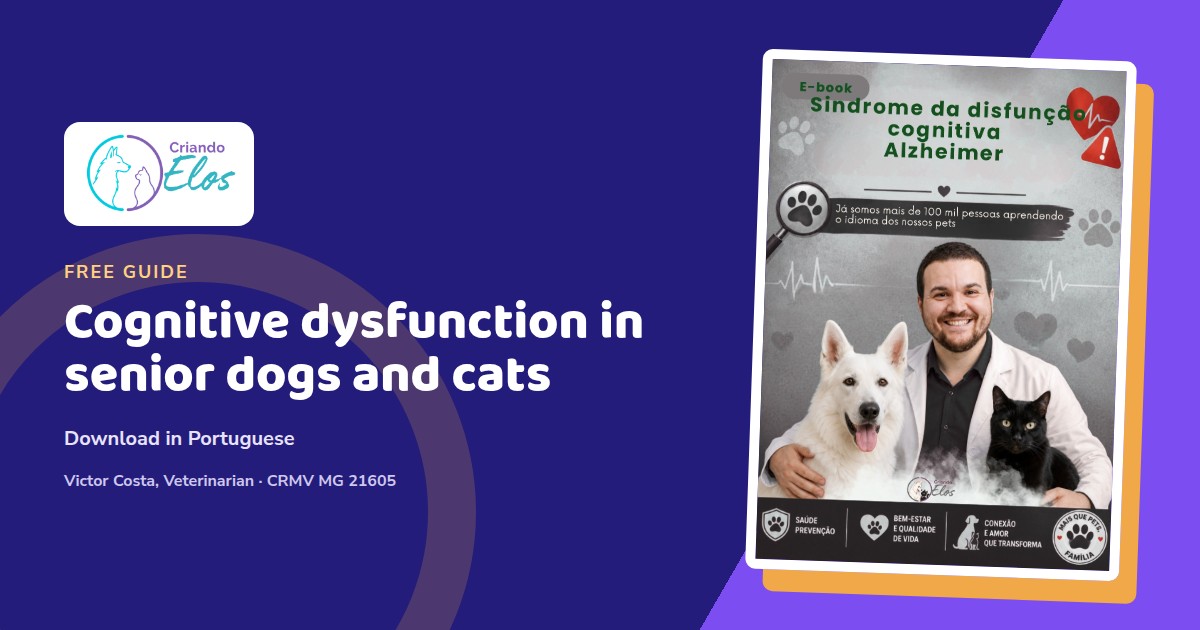
Editorial composition based on the original Criando Elos e-book.
Your dog gets trapped behind an open door. The cat who always used the litter box starts urinating beside it. At night, one of them wanders and vocalizes. Changes like these should not be dismissed as stubbornness or an unavoidable part of getting older.
Cognitive dysfunction syndrome is an age-related neurodegenerative condition. It can affect memory, learning, orientation, sleep, activity, and social behavior. The condition is well described in dogs and less studied in cats. In both species, the diagnosis only makes sense after other causes of behavioral change have been investigated.
Look for a pattern rather than one isolated sign
Changes often appear gradually. A family may adjust the daily routine without realizing that the animal has lost a skill. Compare your pet with their own behavior several months ago, rather than with another animal of the same age.
In dogs, veterinarians often group the signs under the acronym DISHAA: disorientation, changes in social interactions, altered sleep and wake cycles, loss of house training and other learned behaviors, activity changes, and increased anxiety. The AAHA notes that signs vary between dogs and cats and that cats may show more vocalization and increased interaction.
| Area to watch | What may appear in dogs | What may appear in cats |
|---|---|---|
| Orientation | getting stuck in corners, hesitating at doors, appearing lost in a familiar room | staring at walls, seeming unable to find resources, wandering through familiar areas |
| Social behavior | seeking less contact, becoming more dependent, reacting irritably to approach | vocalizing more, seeking attention at unusual times, withdrawing or tolerating less touch |
| Sleep | sleeping more during the day, walking around or barking at night | waking and meowing overnight, switching usual periods of sleep and activity |
| Elimination | urinating or defecating indoors despite previous house training | eliminating outside the litter box or appearing unable to reach it |
| Activity and learning | repeating routes, losing known cues, playing less | abandoning play, repeating movements, taking longer with simple tasks |
Cornell describes changes in orientation, interaction, sleep, elimination, activity, anxiety, and learning in dogs. On its page about cats, the university includes nighttime vocalization, litter box changes, excessive sleeping, and reduced interest in food or play among the signs that warrant investigation.
One accident in the house or one restless night does not confirm the syndrome. Frequency, context, progression, and the way signs occur together help the veterinarian understand the pattern.
Other problems can look like cognitive decline
Before attributing a change to the brain, the clinical team needs to ask what else could cause it. Arthritis pain can make a cat avoid a high-sided box or a dog resist contact. Vision or hearing loss may look like disorientation. Kidney disease, diabetes, and urinary disease can increase elimination or cause accidents indoors.
In senior cats, hyperthyroidism and high blood pressure can cause restlessness or vocalization. High blood pressure can also lead to vision loss and neurological signs. Cornell lists these differentials in its overview of feline cognitive dysfunction, along with kidney disease, pain, dental disease, and conditions within the brain.
In dogs, a veterinarian may also investigate endocrine disorders, liver or kidney disease, seizures, vestibular disorders, inflammation, and tumors. Anxiety and changes in the home belong in the history, but they do not replace a medical evaluation.
Seek veterinary care promptly if disorientation began suddenly or occurs with a seizure, fall, inability to stand, head tilt, rapid eye movements, weakness, collapse, sudden loss of vision, or persistent circling to the same side. UC Davis treats sudden neurological changes as situations requiring rapid assessment. Do not wait for an acute problem to become gradual.
Cognitive dysfunction usually has a progressive onset. An abrupt decline requires a new assessment even in an animal with an established diagnosis. A second illness or a treatable complication may be present.
Assessment combines the history, examination, and tests
No single test confirms cognitive dysfunction syndrome. The veterinarian compares the history with physical and neurological examination findings and looks for diseases that explain the signs better. The AAHA includes blood testing, urinalysis, neurological assessment, and cognitive questionnaires among tools used for an unwell senior pet.
Bring a timeline. Record when each change appeared, how often it happens, and the setting in which it occurs. Videos of your pet getting lost, repeating a route, vocalizing, or trying to use the litter box may show behavior that never happens in the clinic. Track appetite, thirst, urine, stool, mobility, response to sounds, and the ability to find food, water, and bedding.
List every medication and supplement. Tell the team about changes in the home, furniture, caregivers, schedules, or other animals. These details help distinguish lost skills from physical discomfort, anxiety, and difficulty reaching a resource.
Tests are selected for the individual animal. They may include a complete blood count, chemistry panel, urinalysis, blood pressure, and assessments of vision, hearing, pain, and mobility. Hormone tests or other investigations are added when the history points in that direction. Brain MRI and analysis of the fluid surrounding the nervous system may be recommended to rule out structural or inflammatory disease, but every pet does not need them.
Tools such as DISHAA and other questionnaires cannot establish a diagnosis at home. When the veterinary team asks you to repeat them at set intervals, they can document trends and response to care.
Each care plan needs to be individual and reviewed
There is no single cure. Care aims to reduce distress, support the abilities the animal still has, treat concurrent disease, and preserve quality of life. A plan may combine changes to the home, suitable enrichment, a therapeutic diet, and medication. What is appropriate for a dog may not be appropriate for a cat.
A medication is labeled for canine cognitive dysfunction in some countries, but availability, contraindications, and interactions must be checked by a veterinarian. Options and supporting evidence are more limited for cats. Do not give another animal’s prescription or start antioxidants, omega-3 products, calming products, or any other supplement without reviewing the pet’s diet, test results, and current treatments.
The FelineVMA senior care guidelines emphasize individualized care and partnership with the family. That matters because treating pain, hypertension, hyperthyroidism, or kidney disease may change a cat’s behavior considerably, even when cognitive decline is also present.
The original e-book presented cannabidiol as a treatment tool. That claim is not included in this guide because the evidence is not strong enough to present it as an established treatment for the syndrome. The AAHA also describes the quality of research on several diets, supplements, and complementary therapies as limited. These choices belong in a veterinary consultation that considers potential benefit, risk, and interactions.
Agree with the veterinary team on ways to measure response, such as calmer nights, fewer episodes of disorientation, easier access to the litter box or toileting area, interest in contact, and comfort while moving. If the animal gets worse, do not increase, stop, or combine products on your own.
Adapt the home while preserving familiar routines
A predictable setting reduces the number of decisions your pet needs to make and helps prevent accidents. Make one change at a time and watch the response.
- keep bedding, water, food, and toileting areas in stable, easy-to-reach locations;
- place nonslip runners along common routes and use gates at stairs or spaces where the pet might become trapped;
- use soft lighting at night and simple scent, texture, or sound cues to mark routes;
- offer large litter boxes with low entrances in more than one location for cats with reduced mobility;
- take a dog outside on a predictable schedule and more often if the dog no longer signals the need;
- maintain physical activity that fits the animal’s pain level, vision, hearing, and mobility;
- offer brief, familiar play, easy scent activities, or simple food searches without insisting when the pet becomes tired or frustrated;
- avoid punishment for accidents, vocalization, or slow responses. The animal may no longer be able to repeat a behavior that used to be automatic.
Large changes, such as moving every piece of furniture or bringing in another animal, may increase confusion. A rigid rule against changing anything also fails when the home has become unsafe. Make access and orientation easier while preserving familiar reference points whenever possible.
Review the setup each week. A useful adjustment makes the route simpler and the pet more comfortable. If your pet starts avoiding the area, slips more often, or becomes agitated, revise the change.
Frequently asked questions
Does every senior pet become confused?
No. Aging can slow learning and affect the senses, but disorientation, a reversed sleep cycle, new vocalization, or loss of learned habits deserve investigation. Age is not a diagnosis.
Does the syndrome occur in cats?
Yes. It has been studied less in cats than in dogs, and its signs overlap with common diseases of older cats. Nighttime vocalization, social changes, and litter box problems are possible clues, not confirmation.
Is urinating in the wrong place a sign of cognitive decline?
It can be part of the pattern, but urinary or kidney disease, diabetes, pain, difficulty entering the box, increased urine production, and stress can do the same. A veterinarian needs to investigate the cause before treating it as a behavioral problem.
Can moving the furniture make the problem worse?
A major reorganization may remove reference points the pet uses. Keep the main resources in stable locations, but make changes needed for safety, such as adding rugs, barriers, or a more accessible litter box.
Do difficult puzzle toys stimulate the brain?
An excessive challenge can cause frustration. Choose short, familiar, adjustable activities that allow easy success. The aim is comfortable movement, exploration, and social contact.
Is there a test that confirms the syndrome?
No. Diagnosis combines compatible signs with the exclusion of other causes. Blood tests, urinalysis, blood pressure, and a neurological assessment may be part of the workup; imaging is selected according to the case.
When is a behavior change an emergency?
When it starts suddenly or occurs with a seizure, fall, balance problem, loss of vision, weakness, collapse, or inability to stand. Seek care without waiting for the next scheduled appointment.
Start with observable facts. The guide on what to record before the veterinary visit can help you build a timeline, and behavior, illness, or breed explains why a new change deserves assessment. For a sudden episode, also read when to go to the vet. The e-book offered on this page is in Brazilian Portuguese, and the Criando Elos courses cover more aspects of caring for dogs and cats.
Keep this guide for later
Enter your details to access the complete PDF. The downloadable material is in Brazilian Portuguese.
Material available in Brazilian Portuguese.Get the complete e-book
Enter your name, email and WhatsApp number. The download appears here after registration.
We could not send your details. Please try again.
Your details will register the request and allow communications related to Criando Elos.
Your e-book is ready
Síndrome da disfunção cognitiva
Download the Portuguese PDFMaterial available in Brazilian Portuguese.This article is educational and does not replace an appointment with the veterinarian. In an emergency, seek care immediately.