
Diabetes in dogs and cats: signs of instability
By Victor Costa, veterinarian (CRMV MG 21605, Brazil) · September 13, 2026 · 7 min
More thirst, more urine, increased hunger or weight loss: these four changes can signal problems in a diabetic pet. Learn to recognize low blood sugar and when to act.

AI-adapted illustration based on the material provided to Criando Elos.
Four changes: thirst, urination, hunger and weight loss
The medical terms describe things you can notice at home. Compare with your own pet’s usual pattern and tell the team if signs persist, worsen or return after improvement.
| Sign | Meaning | What you may notice at home |
|---|---|---|
| Polydipsia | Increased thirst | More trips to the water bowl; refilling it more often |
| Polyuria | Increased urine volume | More accidents, extra trips outside or larger litter clumps |
| Polyphagia | Increased hunger | Asking for food more persistently, even after the usual portion |
| Weight loss | Unplanned loss of body weight | Weight falling despite a good or increased appetite |
AAHA describes increased thirst, urination and appetite with weight loss among classic signs in dogs and cats. More glucose in the urine can lead to water loss and increased thirst. Difficulty using glucose for energy helps explain weight loss despite hunger.
Imagine your cat starts producing larger urine clumps again but still plays. That is a change to report; you do not need to wait for weight loss as well. Note when it started and any changes to food or medication. Keep water available.
For dogs receiving treatment, AAHA considers these signs and body weight central to assessing control. These changes do not authorize increasing insulin: the team needs to investigate the cause and assess treatment.
Low blood sugar: recognize the signs and act promptly
Hypoglycemia means blood glucose has fallen too low. It can happen during insulin treatment and become an emergency. The first sign may be behaviour that is very different from usual, before any fainting occurs.
Watch particularly for:
- Disorientation, confusion or unusual behaviour.
- Marked sleepiness or an unusual difficulty responding.
- Sudden weakness, stumbling or an unsteady walk.
- Trembling or muscle twitches.
- Seizures, collapse or loss of consciousness in severe cases.
Cornell lists weakness, lethargy, poor coordination, seizures and coma among hypoglycemia signs. Do not wait for a seizure to seek help.
What to do if you notice these signs
Contact your veterinarian or emergency hospital immediately and arrange care. Tell them your pet is diabetic, describe the signs and state when the last medication was given.
If your pet is alert and can swallow normally, offer food. If they refuse and it is safe to reach the mouth, a small amount of honey or glucose syrup on the gums may be a temporary measure while you obtain help. UC Davis advises offering food, using sugar on the gums when needed and contacting the team immediately.
If your pet is having a seizure or is unconscious, do not force food, water, honey or your fingers into the mouth. Seek emergency care immediately. Cornell highlights this precaution to avoid accidents.
Do not give more insulin after suspected hypoglycemia until you receive veterinary instructions. Notify the team even if your pet seems better, because the glucose drop can recur. Agree in advance on a first aid plan for your pet, including the phone number and address of after-hours care.
Restlessness, unusual vocalization, dilated pupils and involuntary urination also deserve reporting, especially if sudden or accompanied by weakness and disorientation. Alone, they do not confirm hypoglycemia and can have other causes.
The Vetsulin manufacturer’s information includes behavioural changes, anxiety and muscle twitching among warnings. Describe what you saw: “became restless and started stumbling” is more useful than trying to make a diagnosis.
Vomiting, food refusal and marked lethargy are warnings too
A pet that was eating well and then refuses food needs attention. If this comes with vomiting, pronounced lethargy or weakness, seek immediate assessment. Do not dismiss it as a change in appetite alone.
One possibility is diabetic ketoacidosis, a complication requiring veterinary treatment. AAHA guidelines describe loss of appetite, vomiting, lethargy and dehydration among signs in cats.
Some cats receiving oral SGLT2 inhibitor medication can develop ketoacidosis without very high glucose. A seemingly reassuring number therefore does not rule out an emergency. Tell the team about every medication, and do not try to distinguish hypoglycemia from ketoacidosis based only on signs.
What to record for your veterinarian
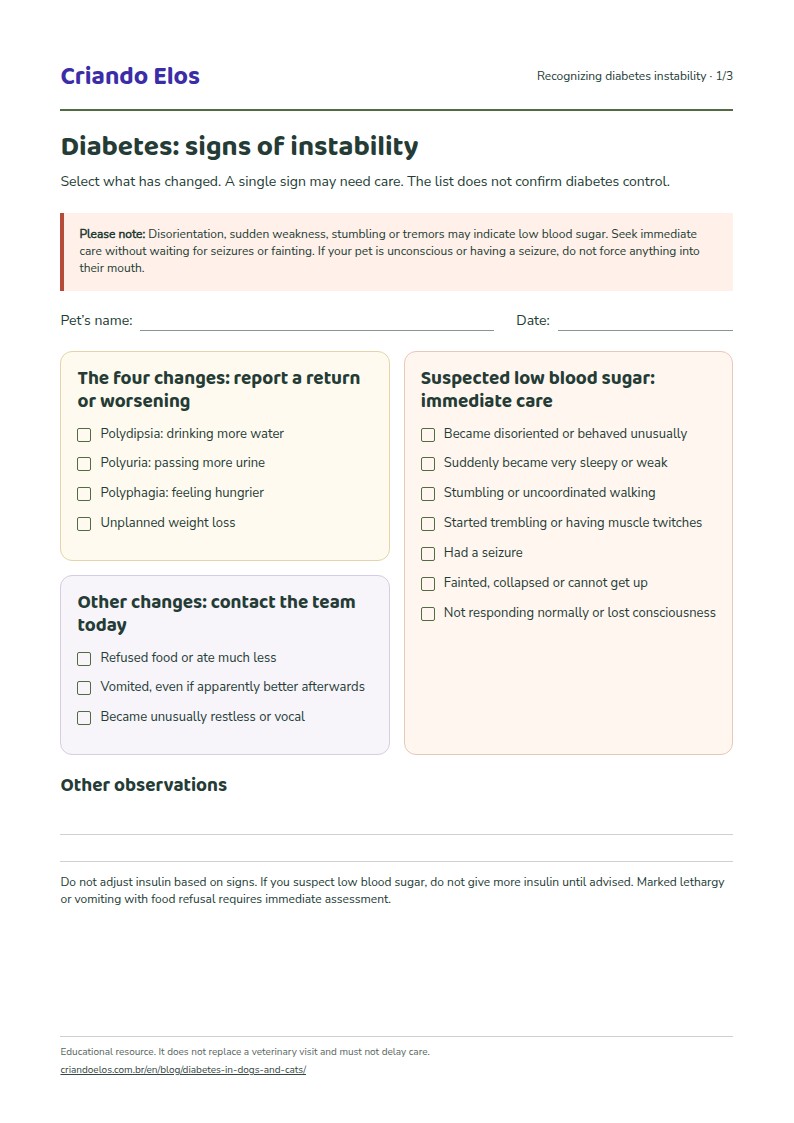
After seeking the advice you need, use the checklist to organize your account. A single sign may require care; selecting nothing does not prove that diabetes is controlled.
Where possible, without delaying help, record:
- What changed and the time it started.
- Whether it happened once, returned or is worsening.
- When and how much your pet ate at the last meal.
- Medication name, dose actually given and time.
- Glucose readings, if already recommended, with time and context.
- Who you contacted and what advice you received.
An entry such as “started stumbling at 3 pm; ate at 8 am; last injection at 8:15 am” gives the team a clear sequence. This is a recording example, not a feeding or insulin schedule. Do not delay transport to fill in times you cannot remember.
AAHA recommends following clinical signs and weight alongside the measurements advised for each dog. For other appointment information, read what to note before speaking to your veterinarian.
Which signs have changed in your pet?
Select what has changed from their usual pattern. These signs help describe possible instability, but cannot tell you on their own whether blood sugar is high or low.
See the signs I selected
No signs selected. This does not confirm that diabetes is controlled.
Your selections stay on this page and are not sent with the form.The number of signs does not measure severity. One sign of low blood sugar is enough to require action. Marked lethargy or vomiting with food refusal also needs immediate assessment. Do not increase insulin because of thirst, urine, hunger or weight changes.
Keep the warning signs within reach
Download the checklist image or the full three-page PDF to print and fill in by hand.
- Checklist of thirst, urine, appetite, weight and low blood sugar signs
- Record of what changed and when it started
- Action plan and contacts for your team and emergency hospital
Save the resource for later
Enter your details to access the files on this page. The interactive checklist above needs no registration.
We could not send your details. Please try again.
Questions after recognizing the signs
Can signs alone tell me whether glucose is high or low?
No. They raise concerns but do not measure glucose and may overlap with other conditions. The team considers your observations alongside the tests and measurements recommended for your pet, as described in AAHA’s monitoring guidance.
I gave insulin at the right times. Can things still change?
Yes. Insulin requirements can change during treatment. Report new signs even when you followed the routine. UC Davis recommends telling the team if thirst, urination or weight loss return.
If thirst improves, can I stop insulin?
Not on your own. Improvement may reflect a response to treatment. Some cats enter remission, but stopping medication requires assessment and instructions. Cornell explains that remission also needs follow-up.
Essential care between appointments
Follow the prescription and record every injection to avoid double dosing. If you do not know how much went in or whether someone else already gave it, do not repeat it to compensate; seek advice. Food, insulin storage and preparation must follow the individual plan and the product instructions.
Keep the emergency telephone number and address accessible to every caregiver. Bring your observations to follow-up, but contact the team sooner if anything changes.
To learn about other changes in your pet’s behaviour, explore O Idioma Pet and Criando Elos courses. These products are in Brazilian Portuguese.
Clinical content reviewed and approved by Victor Costa, veterinarian (CRMV MG 21605, Brazil). Translation of the reviewed Brazilian Portuguese content.
This article is educational and does not replace an appointment with the veterinarian. In an emergency, seek care immediately.