
Hypothyroidism in dogs: signs and diagnosis
By Victor Costa, veterinarian (CRMV MG 21605, Brazil) · September 15, 2026 · 6 min
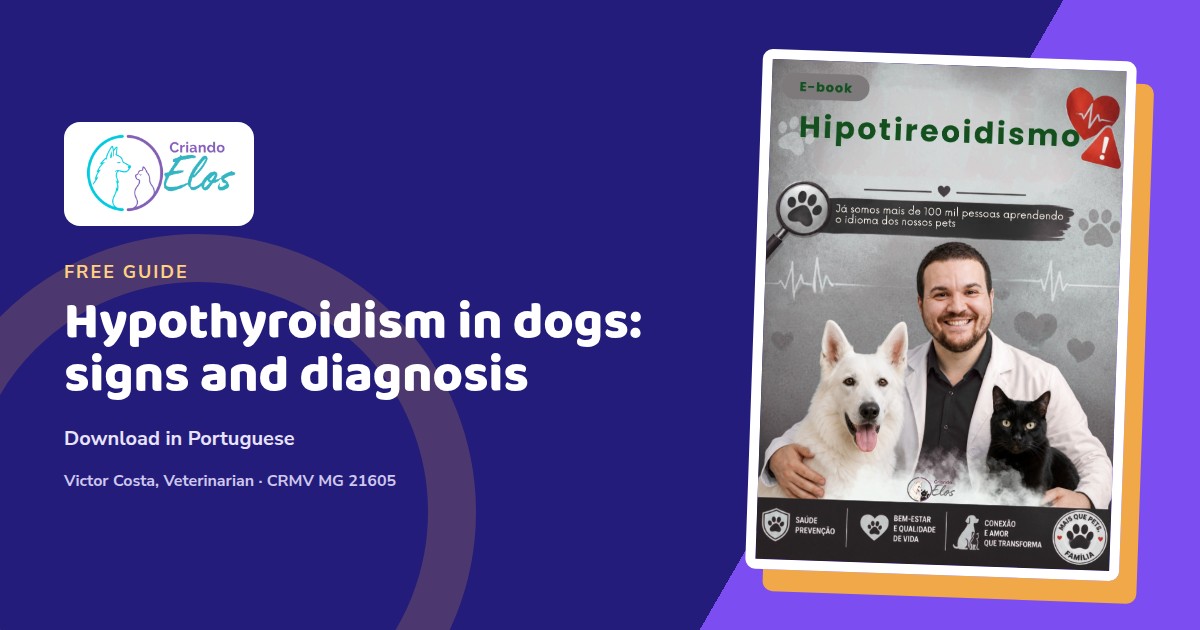
Editorial composition based on the original Criando Elos e-book.
Your dog has started stopping during walks, gained weight and developed a thinner coat. These changes deserve a veterinary appointment, but they do not identify a single cause. Even a low T4 result leaves a question: is the thyroid gland failing, or has something else affected the measurement?
This guide brings together the topic of the Criando Elos e-book and veterinary references to help you notice changes and discuss the investigation. Diagnosis requires assessment of the dog. A symptom list, photograph or highlighted laboratory result cannot replace that assessment.
Which changes deserve attention?
Tiredness, reduced interest in activity, weight gain and seeking warm places can occur with hypothyroidism. The coat may become dry, regrow slowly after clipping or develop hair loss, and the skin may darken. Skin or ear infections may recur, according to Cornell’s guide for dog owners.
The most useful comparison is with your own dog’s usual routine. Note whether they have started stopping on a familiar route, stopped fetching a favourite toy or begun sleeping through times when they previously interacted with the family. Describing the behaviour gives the veterinarian more information than simply saying your dog is lazy.
For weight changes, look for earlier measurements and include treats in the food history. Check the impression that feeding has stayed the same: someone else may offer snacks, portion sizes may vary or activity may have decreased. Bring the information without deciding what caused the change before the appointment.
Describe coat changes just as carefully. Photograph affected areas in similar lighting, record when you first noticed them and mention any itching. The veterinarian needs to know what appeared first and which products have already been applied. If skin problems keep returning, our article on Malassezia in dogs and cats can help you prepare questions about skin testing.
What happens to the thyroid gland?
Hypothyroidism means that thyroid hormone production is insufficient. In adult dogs, common causes involve immune destruction of thyroid tissue or shrinkage and loss of functioning gland tissue. Some breeds are predisposed, but breed does not establish a diagnosis. These mechanisms are outlined in the AAHA endocrinopathy guidelines.
For an owner, this explanation helps clarify what the veterinarian is investigating. Ask whether the suspected problem involves the thyroid gland itself and which findings support that possibility. Having a name for the suspected condition makes the conversation easier to follow, but it does not mean the investigation is finished.
Avoid comparing your dog only with photographs of dogs already diagnosed. Two dogs with similar coats may be undergoing assessment for different reasons. Equally, do not dismiss the need for an appointment because your dog does not resemble an e-book photograph or belong to one of the breeds mentioned.
How do tests help establish a diagnosis?
The veterinarian combines the history, physical examination and laboratory findings. Low total T4 alone does not confirm hypothyroidism; when suspicion remains, free T4 and TSH help with assessment. Normal TSH does not independently rule it out either. The AAHA diagnostic guidance requires interpretation alongside the clinical picture.
Use this table to prepare questions, rather than trying to diagnose your dog from a report:
| Information | What to ask at the appointment | What to keep |
|---|---|---|
| Total T4 | Does this result need further investigation? | Value, units and laboratory reference interval |
| Free T4 | Why was this test selected, and which method was used? | Full test name and sampling date |
| TSH | How does this fit with the other results? | Result alongside the other hormone measurements |
| General blood tests | Which other possibilities need assessment? | Complete reports and previous results |
Do not copy only the numbers marked in red. Bring the entire document, including reference intervals, laboratory details and the date. If results come from different services, keep each result attached to its own report. The veterinary team can decide which comparisons are appropriate.
A blood count and biochemical profile help assess general health, but findings such as anaemia or high cholesterol are not specific to hypothyroidism. T3 is usually not a decisive test in the routine investigation because levels can vary even in affected dogs. The Merck Veterinary Manual explains these limitations.
A practical question when receiving results is: “What can we conclude, and what is still uncertain?” Ask for the answer and next step in your written instructions. That helps prevent leaving the appointment remembering the word hypothyroidism without knowing whether it was a possibility or an established diagnosis.
Why can illness and medication affect results?
Diseases outside the thyroid gland and medications can lower measured hormone levels. Cornell identifies chronic illnesses and glucocorticoids among the factors involved. Free T4 can help clarify some situations, but still requires context. See Cornell’s thyroid testing interpretation guidance.
Severe illness can lower even free T4, as explained in the AAHA diagnostic guidance cited above. A sample collected during another illness therefore needs that information attached to it. Explain whether your dog was eating normally, which problem prompted the blood test and what medications were being used at the time.
Some circumstances require additional care: healthy sighthounds can have lower thyroid values than other dogs; antibodies can interfere with certain assays; and thyroglobulin antibodies can indicate thyroiditis without establishing current hormone deficiency. The Michigan State University veterinary laboratory describes these differences.
Do not stop medication to try to obtain a “cleaner” test. Give the team a complete list and follow the individual instructions. If another sample is planned after assessment of a different illness, ask when to return and which changes require earlier contact. A reassessment plan does not mean deterioration should be ignored.
What should you bring, and when is it urgent?
A short record on your phone allows other household members to add observations. It is for organising the appointment, with no scoring system or diagnostic interpretation:
- Approximate dates when changes began and what they stopped your dog from doing.
- Recorded weights, food offered and treats.
- Coat photographs and descriptions of itching or skin lesions.
- Medications, supplements and other products, with packaging or prescriptions.
- Complete laboratory reports, previous illnesses and details of services that have seen your dog.
Keep observations separate from conclusions. “Stopped twice on the usual route” is an observation; “the thyroid is getting worse” is a conclusion an owner cannot draw from that behaviour. If you do not know when something began, record that the date is approximate.
Seek immediate veterinary care for collapse, difficulty breathing or markedly reduced awareness. Do not wait for a thyroid test before getting help. Myxoedema coma is a rare complication of severe hypothyroidism described in the Merck Manual cited above, but emergency care does not depend on confirming that cause.
For persistent changes without these emergency signs, contact the practice and explain what is happening so an assessment can be arranged. For older dogs, the senior dog and cat check-up guide can help you gather other relevant information.
Frequently asked questions
Does every dog that gains weight have hypothyroidism?
No. Weight is one piece of the investigation. Bring previous measurements and describe feeding and activity so the change can be assessed in context.
Does low T4 confirm the diagnosis?
No. An isolated low result needs interpretation alongside clinical findings, other tests and factors that may affect the measurement.
Does normal TSH rule it out?
Not on its own. Ask how that result fits with total T4, free T4 and the changes observed in your dog.
Should I request a T3 test myself?
No. The veterinarian and laboratory should select the appropriate panel. T3 alone does not usually resolve the routine diagnostic question.
Can I give thyroid hormone to see whether my dog improves?
Do not try this at home. Investigation and any prescription require veterinary oversight; tell the team if your dog has already received a hormonal product.
Can I wait until the next routine appointment?
Contact the practice when you notice persistent changes and ask about arranging assessment. Collapse, breathing difficulty or a major change in awareness requires immediate care.
What to do next
Bring your record and request written guidance about the results and next step. If a diagnosis has already been established, read our article on treating and monitoring canine hypothyroidism.
The original e-book is available after registration below and is in Brazilian Portuguese. Use it as educational support for conversations with your veterinarian; the test limitations explained in this article still apply.
Keep this guide for later
Enter your details to access the complete PDF. The downloadable material is in Brazilian Portuguese.
Material available in Brazilian Portuguese.Get the complete e-book
Enter your name, email and WhatsApp number. The download appears here after registration.
We could not send your details. Please try again.
Your details will register the request and allow communications related to Criando Elos.
Your e-book is ready
Hipotireoidismo
Download the Portuguese PDFMaterial available in Brazilian Portuguese.This article is educational and does not replace an appointment with the veterinarian. In an emergency, seek care immediately.