
Periodontal disease in dogs and cats: signs and care
By Victor Costa, veterinarian (CRMV MG 21605, Brazil) · September 15, 2026 · 8 min
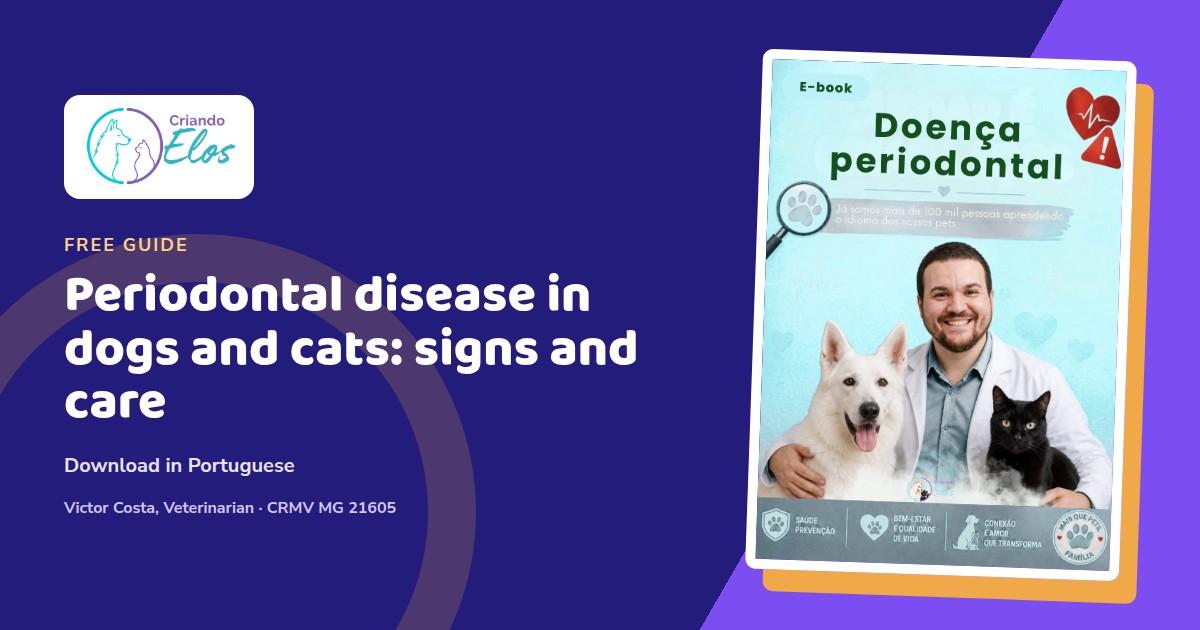
Editorial composition based on the original Criando Elos ebook.
The bowl is full, but your pet chews on one side, drops kibble, and walks away. Their breath may have changed too. That combination calls for an oral exam. Dogs and cats may keep eating despite pain, and much of periodontal disease remains hidden below the gumline.
Bad breath is only one clue
Persistent strong breath should not be dismissed as a normal part of aging. Red, swollen, or bleeding gums, visible tartar, drooling, difficulty picking up or chewing food, and a sudden preference for soft food also deserve attention. The MSD Veterinary Manual lists these signs, along with receding gums, loose teeth, and tooth loss in more advanced disease.
Some pets become less social, resist having their face touched, or chew only on one side. Others show no obvious change. A pet that does not complain can still have a painful mouth.
| What you notice | What may be happening | What to do |
|---|---|---|
| Persistent bad breath, tartar, or red gums | Gingival inflammation or another oral condition | Book an appointment even if your pet is still eating |
| Dropping food, chewing on one side, drooling, or refusing hard treats | Oral pain, a fractured tooth, tooth resorption, or periodontal disease | Arrange an evaluation rather than waiting for weeks |
| A loose tooth, nasal discharge, or a draining sore below the eye | Advanced disease, an opening into the nasal cavity, or a tooth root infection are among the possibilities | Call the clinic the same day |
| Rapid facial swelling, trouble breathing or swallowing, heavy bleeding, or inability to drink | A complication may require prompt stabilization | Seek emergency care |
Do not force open the mouth of an animal in pain. A calm look along the gumline can reveal changes, but pressing on a tooth, scraping tartar, or trying to photograph the back of the mouth can cause pain and a bite.
Gingivitis and periodontitis are different
Plaque is a soft biofilm that sticks to the tooth. The body’s inflammatory response to plaque bacteria starts gingivitis. Minerals in saliva can harden plaque into dental calculus, commonly called tartar. Calculus creates a rough surface where more plaque can collect, but the brown material you can see does not measure the damage under the gumline.
With gingivitis, inflammation remains limited to the gums and there is no loss of tooth attachment. Removing plaque and maintaining daily control can reverse this stage. With periodontitis, inflammation has destroyed part of the periodontal ligament and alveolar bone supporting the tooth. AAHA distinguishes this irreversible damage from reversible gingivitis.
This leads to a misleading situation: a tooth may look acceptable above the gumline while hiding a deep pocket or bone loss near its root. The reverse can happen too. Heavy visible tartar draws attention, but the stage of each tooth depends on the attachment it has lost, not on how brown it looks.
In cats, tooth resorption and gingivostomatitis can cause similar signs and may exist alongside periodontal disease. Cornell University describes tooth resorption as a separate, painful condition. Bad breath may also occur with kidney disease, diabetes, liver disorders, oral tumors, or other inflammation in the mouth. An examination helps separate these possibilities.
A complete diagnosis requires anesthesia
At the appointment, the veterinarian starts with the history, examines the face, and looks inside the mouth while the pet is awake. This step finds visible changes and helps plan care. It cannot safely expose every surface of every tooth or measure what lies below the gumline.
A complete periodontal assessment requires general anesthesia, probing around each tooth, charting the findings, and taking intraoral dental radiographs. These images show the roots, bone, and areas the eye cannot reach. According to the MSD Veterinary Manual, full-mouth radiographs help prevent hidden disease from being missed and reduce the risk of inappropriate treatment.
The team assesses the patient before anesthesia and plans monitoring, pain control, and support according to age, existing conditions, and the expected procedure. Ask which preanesthetic tests are recommended, how your pet will be monitored, and who will oversee recovery. Age alone does not determine whether the risk is acceptable.
Scraping teeth while the animal is awake removes only some of the visible material. It does not allow probing, radiographs, complete cleaning below the gumline, or treatment of the lesions found there. The current American Veterinary Dental College position states that this service does not replace comprehensive dental care under anesthesia and is not an effective way to prevent dental disease.
Cleaning, periodontal treatment, and extraction do different jobs
The plan is made tooth by tooth. Professional cleaning removes plaque and calculus above and below the gumline, and polishing smooths small irregularities left by the instruments. In a mouth with gingivitis, this creates an opportunity for the gums to recover, provided plaque control continues at home.
When periodontitis is present, surface cleaning cannot rebuild lost tissue. Some teeth may be candidates for periodontal treatment; others with major attachment loss, a fracture, or infection need extraction. Probing and radiographs guide that decision. Keeping a tooth that has lost its support can prolong pain and inflammation.
Antibiotics do not remove plaque, calculus, diseased tissue, or a tooth that cannot be saved. They may be appropriate in selected situations, but they do not replace treatment of the cause. The same limitation applies to sprays, water additives, and dental treats. None can treat a deep periodontal pocket on its own.
After the procedure, the team should explain what they found, which teeth were treated or removed, how pain will be controlled, and when feeding and home care may resume. Do not start brushing a recently operated mouth until the veterinary team clears it.
What about the kidneys, liver, and heart?
Periodontal disease causes local pain, infection, and inflammation. Bacteria, bacterial fragments, and inflammatory mediators can enter the circulation. Studies in dogs and cats have found associations between periodontal disease and some measures of systemic health.
An association does not prove that the mouth caused a specific kidney, liver, or heart disease. AAHA guidelines caution that directly blaming bacteria from the mouth for infection in distant organs is an oversimplification. Other factors, including age and concurrent illness, may contribute to the relationship.
There is already a strong reason to treat the mouth without making a larger promise: periodontitis hurts, destroys tooth support, promotes tooth loss, and reduces quality of life. Treating it also reduces a chronic source of inflammation. The guide to diabetes in dogs and cats explains why existing conditions need to be part of planning for the procedure and recovery.
Prevention targets plaque before tartar is visible
Daily brushing with a soft brush and toothpaste made for dogs or cats is the most effective form of home plaque control. Do not use human toothpaste. Start with very short sessions, let your pet smell the supplies, first touch only the outside of the lips, and pair each approach with a reward. The goal is to build tolerance, not to restrain the animal.
If the gums bleed, a tooth is loose, the mouth seems painful, or resistance appeared suddenly, stop and arrange an examination. Brushing an already painful mouth can add discomfort and make future handling harder. Brushing prevents new buildup. It does not remove hardened tartar or restore lost bone.
Dental diets, chews, gels, and water additives may supplement the plan. Choose products suitable for your pet’s species and size. The Veterinary Oral Health Council lists products awarded its seal for controlling plaque, tartar, or both. The seal applies to the evaluated claim. It does not turn the product into treatment for existing disease.
Make an oral check part of routine veterinary visits. Small, brachycephalic, older pets and animals with crowded teeth may need more frequent follow-up. There is no single cleaning interval for every pet. The veterinarian sets follow-up according to risk, examination findings, and the home care that is practical for that animal.
Frequently asked questions
Does bad breath always mean periodontal disease?
No. It is a common sign of oral disease, but kidney disease, diabetes, liver disorders, tumors, and other conditions can also change breath odor. Persistent bad breath needs an examination rather than a product that masks it.
Can brushing or a dental treat remove tartar?
Not safely. Brushing controls soft plaque and helps prevent new buildup. Firmly attached calculus requires professional instruments, including treatment below the gumline when needed.
Can I use human toothpaste on my pet?
No. Use veterinary toothpaste intended for your pet’s species. Human products are designed to be spat out and may contain ingredients that are unsafe when swallowed by a dog or cat.
Is anesthesia-free cleaning enough for a mild case?
It cannot assess or clean the full area below the gumline and does not include the dental radiographs needed to see roots and bone. Discuss preanesthetic evaluation and monitoring rather than replacing a complete diagnosis with cosmetic scraping.
Does every tooth with tartar need extraction?
No. Extraction depends on attachment loss, root condition, fractures, infection, and whether the tooth can remain without pain. Probing and radiographs guide the decision for each tooth.
My pet still eats. Does that rule out mouth pain?
No. Many animals change how they chew or swallow food with little grinding. Chewing on one side, dropping food, preferring soft food, and losing interest in treats can reveal discomfort.
The next step
Today, notice your pet’s breath, gumline, and chewing without forcing the mouth open. If anything has changed, record when it started and arrange an evaluation. The guide on what to note before the vet visit can help you bring a clear history. For rapid swelling, breathing trouble, heavy bleeding, or inability to drink, use the guide on when to go to the vet and seek emergency care.
Keep this guide for later
Enter your details to access the complete PDF. The downloadable material is in Brazilian Portuguese.
Material available in Brazilian Portuguese.Get the complete e-book
Enter your name, email and WhatsApp number. The download appears here after registration.
We could not send your details. Please try again.
Your details will register the request and allow communications related to Criando Elos.
Your e-book is ready
Doença periodontal
Download the Portuguese PDFMaterial available in Brazilian Portuguese.This article is educational and does not replace an appointment with the veterinarian. In an emergency, seek care immediately.